

Growing up, my grandma owned a small auto parts store in South Carolina. It was right beside a truck stop, and it did a good business before the interstate started siphoning traffic away. Even now, I can still smell the stockroom, with its tall aisles of rubber belts and hoses. I thought it was fun to sweep the floor between the aisles with the push broom, after which my grandma would reward me with snacks from the vending machine. Eventually, she retired and sold the store, which has long since gone out business along with the truck stop beside it.
Now that I look back on it, my grandma had to be pretty tough to be the sole proprietor of an auto parts store beside a truck stop, especially during that day in age. She ran it, by necessity, after my grandpa died early from cancer. But my grandma knew her stuff. In an era before computers, tough truckers and shade tree mechanics turned to her for help. She would often go out to vehicles to look under the hood and help diagnose problems, and if she couldn’t identify the needed part off of sight alone, she had shelves and shelves of thick parts manuals she could flip through to help customers identify and find an elusive part.

Speaking of elusive parts, about ten years ago, I became the proud owner of an ancient pull-type combine whose manual couldn’t be found on the internet. When I bought the old combine, it soon started showing its age and I had to replace the long drive belt on the back of the combine that made the machine shake and separate the grain from the chaff. It was a booger of a belt to find. I called around to a few places, and the response was universal, “Take it to Bonnie.”
I had no idea who Bonnie was and neither did my wife’s grandpa Lowry, who was helping me repair the old machine. Come to find out, she was the proprietor of an off-the-beaten path store that specialized in belts, hoses, and bearings, a business she inherited from her dad when he passed away.
The store itself was much larger than my grandma’s little parts store, but the smell was much the same. A middle-aged woman, presumably Bonnie, was standing behind the counter when Lowry and I arrived. Wearing a sleeveless shirt, she had dark tan arms that were beyond toned--they were downright muscular. On the wall were pictures of her in bikinis, often standing beside large trophies. Judging from the pictures and her arms, she was an award-winning body builder in her spare time.
“Are you Bonnie?” Lowry asked--even he seemed a little intimidated.
“Yeah, who’s asking?” she said.
“Ah, just two guys looking for a needle in a haystack,” said Lowry, “You ever seen anything quite like this?” I held up the remnants of the broken belt.
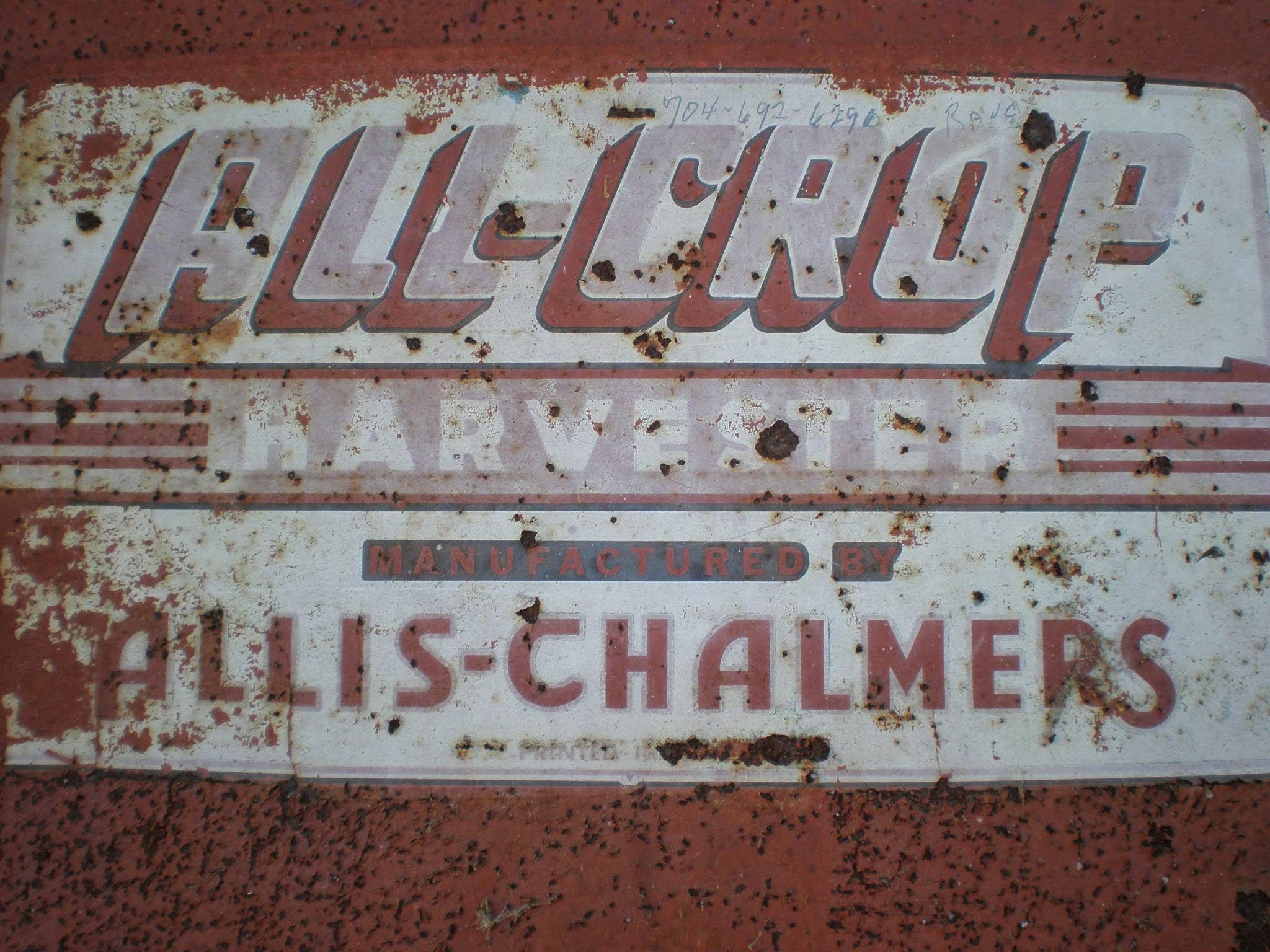
“It looks like the drive belt off of an old Allis Chalmers All Crop Harvester,” she said. “Haven’t seen one of those in years.”
Lowry and I both turned our heads and looked at one another in amazement. Most farmers nowadays had no idea what an All-Crop Harvester was--and here she had correctly identified an obscure belt off one just by glancing at it.
“Can you order one for us?” I asked, hopeful we could have one delivered in a few weeks.
“Order one?” she said, puzzled. “I can make you one, if that’s what you mean. Just give me a few minutes.” She then took the broken belt from me, measured it in multiple ways, and then handed it back to me and disappeared into the back stockroom. Lowry and I browsed around the front of the store, looking at general merchandise--bins of bolts and nuts and washers, shelves with various colors of automotive spray paint, and an aisle dedicated to all sorts of oils and lubricants. It reminded me of my grandma’s old store.
Less than five minutes later, Bonnie reappeared with a freshly made belt that ended up perfectly fitting the old combine. Again, Lowry and I looked at one another in amazement.
Over the years, we frequented Bonnie’s shop many times because parts were forever breaking on the old combine. Bonnie seemed to have a photographic memory for both parts and people. This earned her a lot of respect among men in the farming community, some of whom could be quite dismissive in their attitude toward women in traditionally male-dominated workplaces. But I suspect Bonnie didn’t put up with that. If she didn’t earn a farmer’s respect by her knowledge, she could just arm wrestle them to put them in their place.
I’d also like to think the farming community is changing, in part because women like my grandma and Bonnie broke down barriers and helped normalize the idea that women can do a “man’s work.” In the basic farm maintenance class I now teach at my local community college, girls nearly always outnumber guys in the class. And in most cases, they not only outnumber them, but outwork them, too.
Good one Stephen. Thanks for the trip down memory lane.
That's because women have to work twice as hard to be considered half as good as men. I hate to be cynical, but the older I get, the more I believe this continues to be true in most cases.