

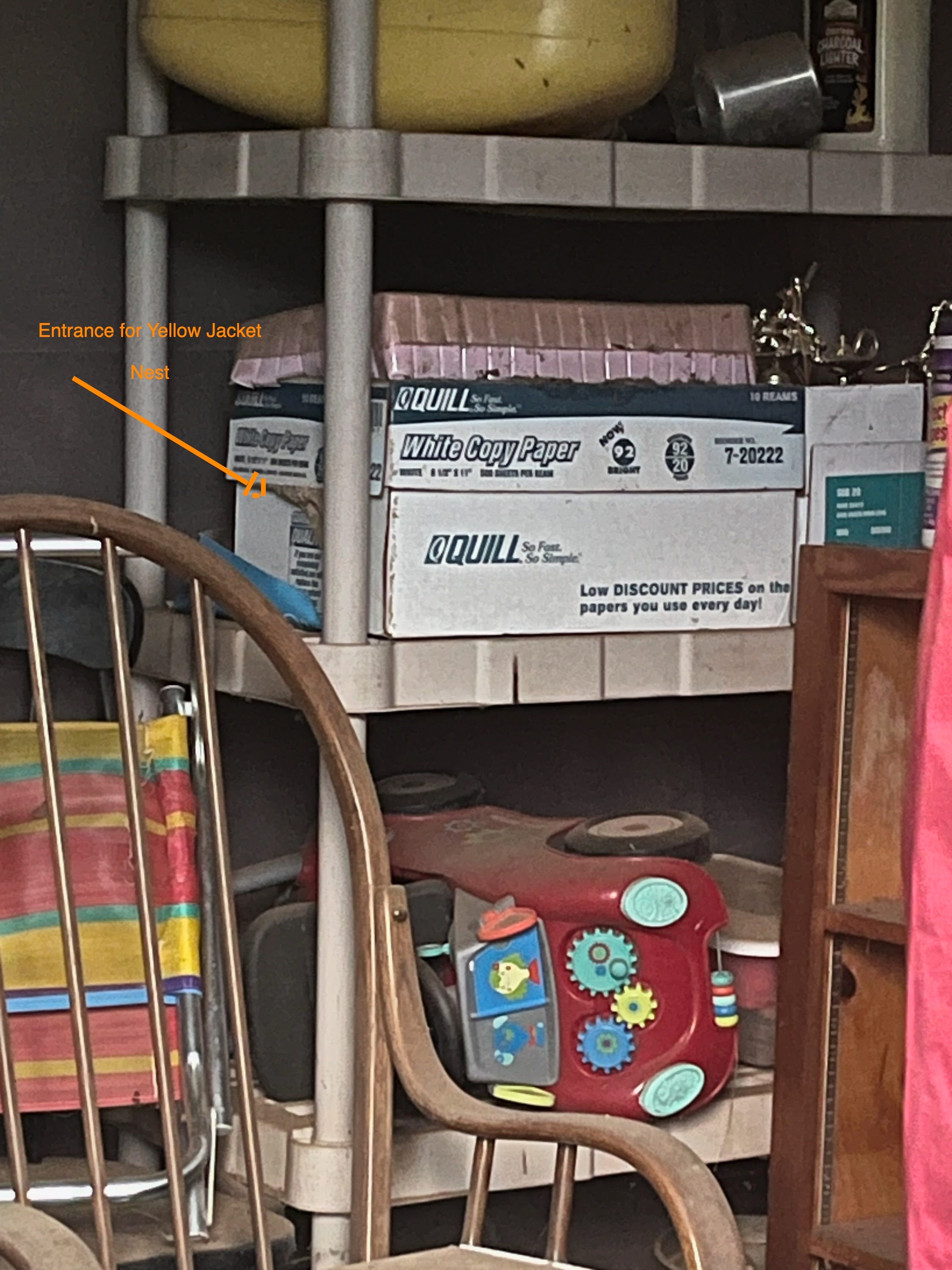
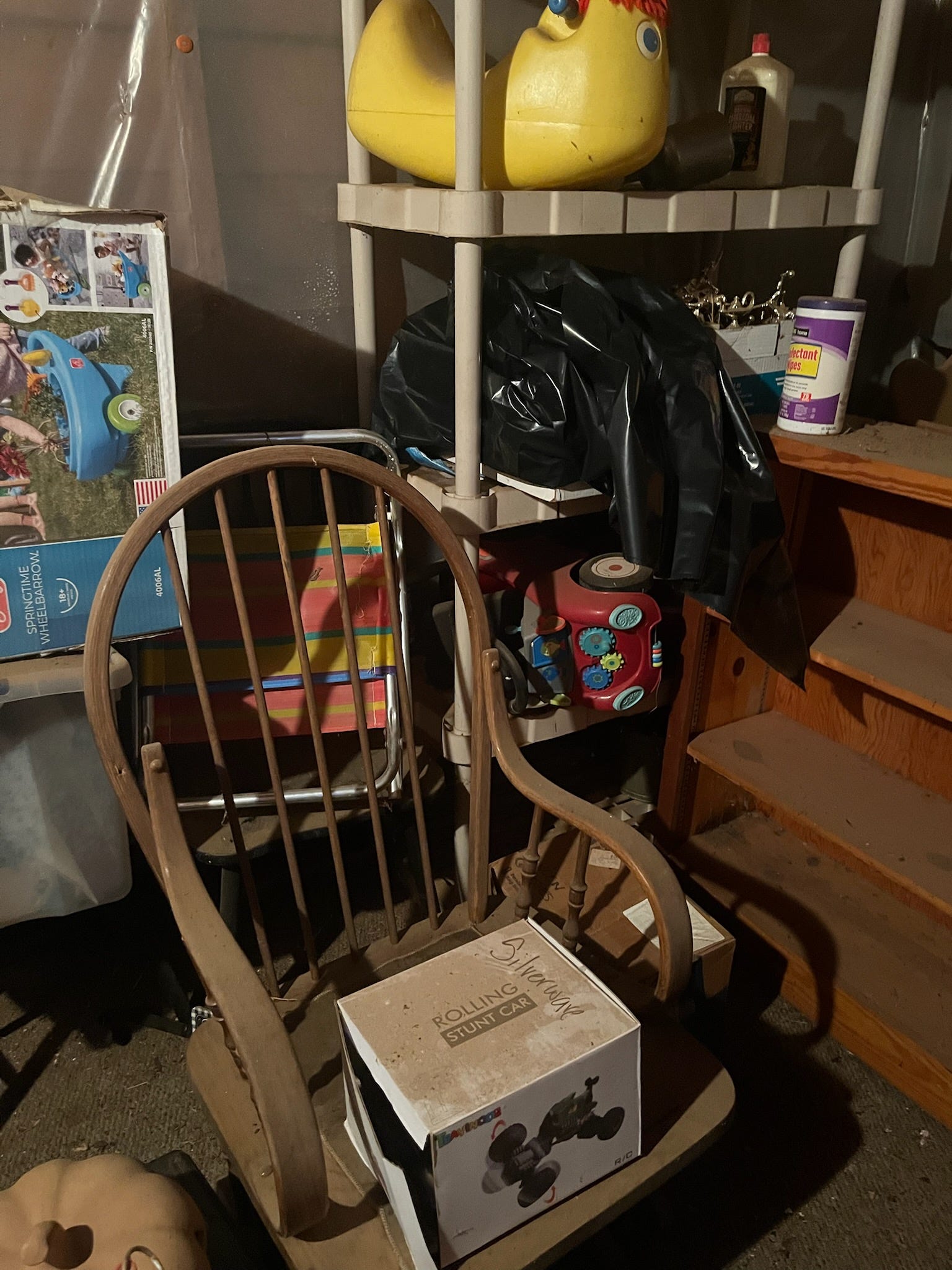
Every year, it seems like I stumble upon a yellow jacket nest. This year it was in a storage room in the barn, in a paper box on a shelf. For the life of me, I can’t remember what I have stored in that box, but whatever it is now cohabitates with carnivorous insects. Thankfully, I spotted the yellow jackets coming and going before I disturbed them. I then suited up in my beekeeper’s jacket, deployed half a can of Raid onto their entrance -- and ran prophylactically.
As best I could tell, this had the effect of killing a couple of yellow jackets (possibly, they died from laughter), but a steady stream of yellow jackets still came and went, seemingly unperturbed by my attack.
So I bought a bug bomb, chucked it into the room, closed the door -- and ran prophylactically. That was two weeks ago, before we went on vacation, and when we got back, I checked and, alas, yellow jackets were still coming and going, seemingly unperturbed by my chemical bombardment.
I’m not sure what I’m going to do. At our last beekeeper’s meeting, the topic of yellow jacket traps came up. In general, beekeepers are not big fans of yellow jackets, which harass and eat our beloved honeybees, which is why we meet monthly to talk about such things as our favorite recipes for yellow jacket traps.
“I use half a cup of brown sugar and grape juice,” one beekeeper said.
“I use sugar and vinegar and a banana peel,” said another, “the banana peel keeps the bees out of the trap.” The trap in this case is a milk jug, with a little door cut into it.
To be honest, I’ve never done much yellow-jacket trapping (mostly just yellow-jacket stumbling), but you’re never too old to learn. The idea behind trapping yellow jackets is to trap them early in the season, when the queens are out house hunting for prime real estate, like paper boxes in a barn. If you can trap the queen, that is one less nest to stumble upon later. As best I can tell from the discussion, trapping yellow jackets later in the season is mostly just done for sport, to see how many yellow jacket workers you can bag. (Meanwhile, big game trappers are hunting for the ones with the biggest antennae).
I may try trapping, but this time of year it won’t catch the queen so the nest will persist. So I have spent a lot of time at night thinking about what I’m going to do to get rid of these yellow jackets in a paper box in the barn. The best I could come up with is old-timey suffocation. My idea is to get a big black contractor trash bag, carefully place it over the paper box, tie it up, (and run prophylactically).
What could go wrong?
Here is what could go wrong: The box is sitting on a shelf. I easily placed the trash bag over the top of the box to begin my murderous plot. However, whatever is in the box was heavier than I expected, so picking the box up to work the trash bag over and around and underneath the box is, let’s say, difficult and taking more time than I predicted. Meanwhile, the hundreds of yellow jackets inside the box are audibly roaring while those returning to their nest have detected my presence and seem to be generally confused, if not dismayed, that I am trying to asphyxiate their family. I look down and several yellow jackets are trying to ventilate my blue jeans by poking holes in them.
I ran.
So now on a shelf in the barn is a paper box with a trash bag over it, with yellow jackets now coming and going as pretty as the please out of the opening I left in the trash bag.
If anybody has any brilliant ideas to eradicate these yellow jackets that doesn’t involve gasoline, please let me know.
We only ever discover them on a tractor, when prophylactically running isn’t much of an option. I have no advice other than just keep running. I got a good laugh out of this, though. It definitely sounds like a problem we’d find ourselves in here. I’m always excited to find fellow beekeepers on Substack!
Prophylactic running away is always a good idea, in my experience.
Susan and I came home from holiday one year to find that European wasps had moved into the cladding of our house. I thought it would be a bright idea to seal up their entrance.
It was … interesting. A few times a day, one or two befuddled, not very aggressive, probably newly hatched wasps would appear in a random room of the house and have to be dealt with, variously gassed, swatted or vacuumed up. Clearly they were in the floors and looking for ways out. I never knew how many cracks there were in our home until I had to locate and seal them all. It took about a month. They haven't come back.
The adults trying to get in to feed the queen and bubs were dissuaded with chemical warfare, interspersed with … you got it … running away. Yeah, beekeeping suits are handy.